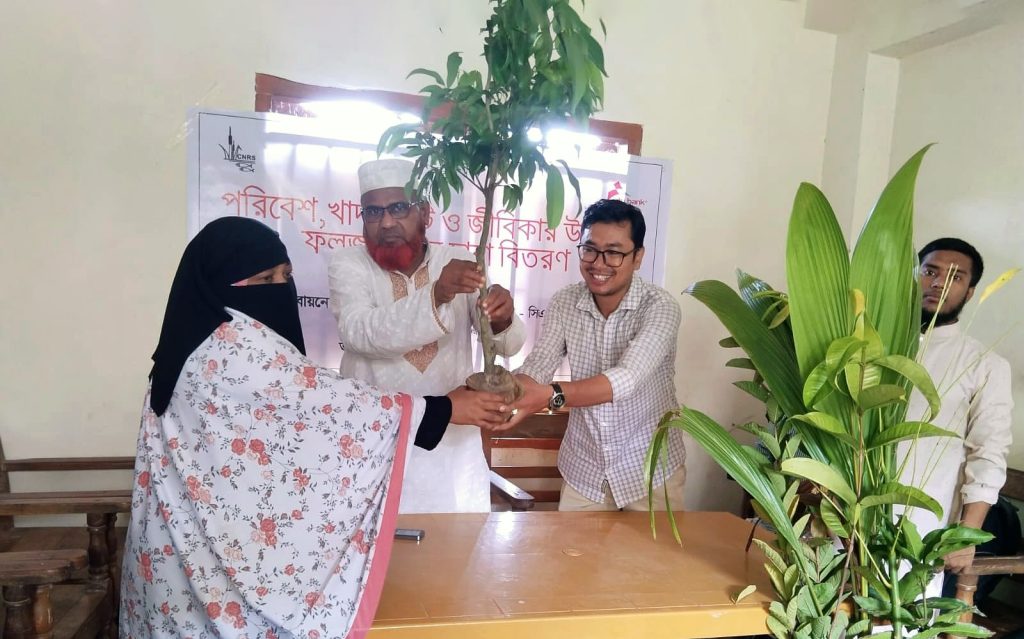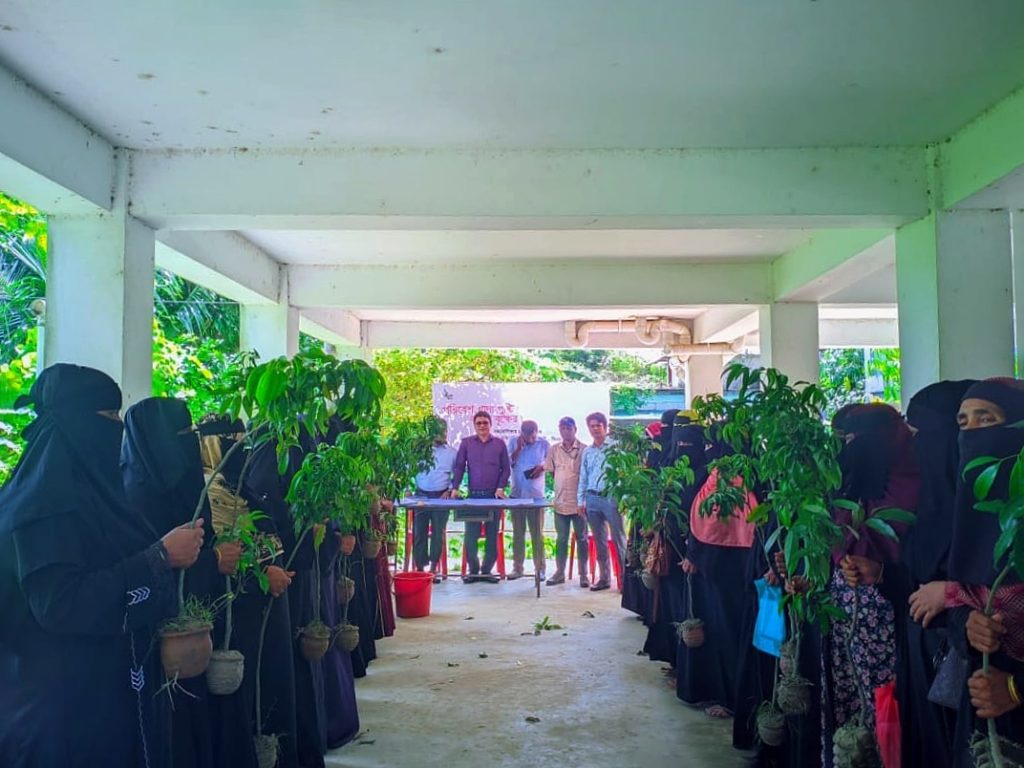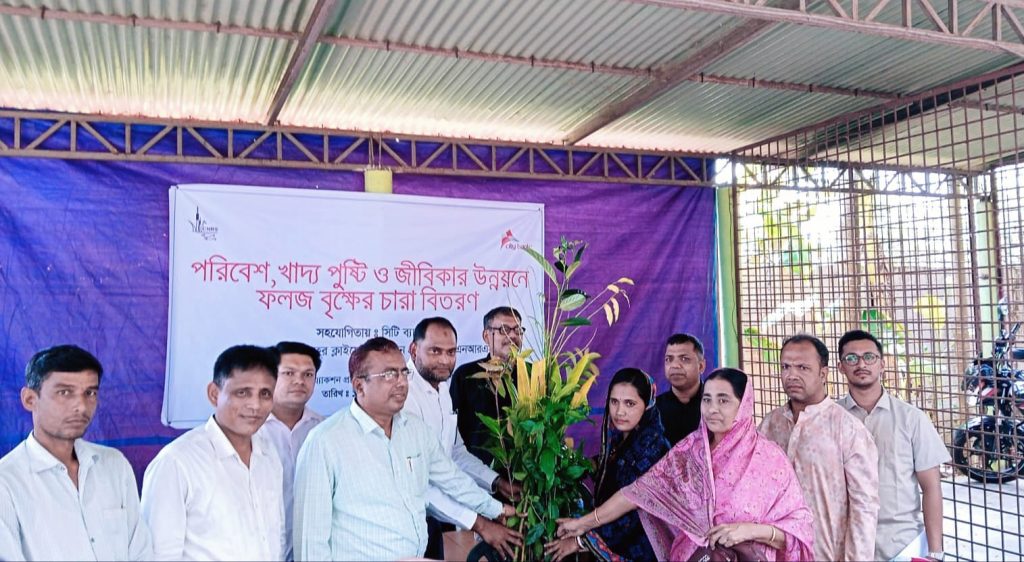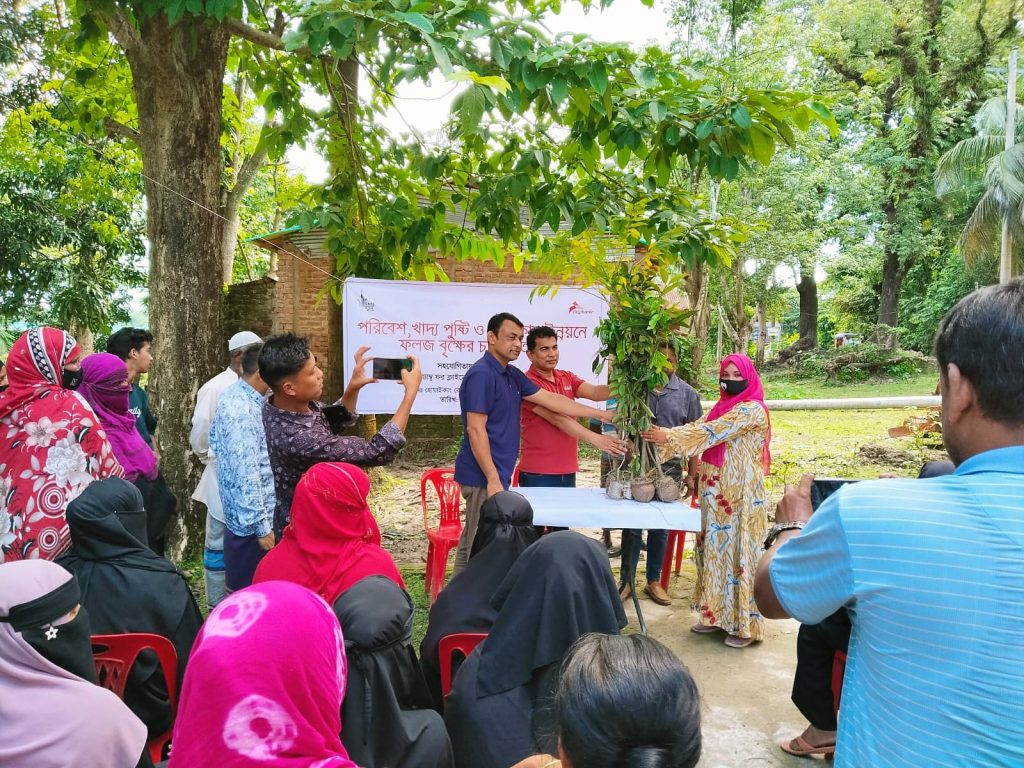

In the climate-vulnerable coastal belt of Cox’s Bazar District, a focused and well-executed initiative is already demonstrating how strategic CSR investments can deliver measurable, long-term impact. Through the Fruiting Tree Saplings Distribution Program, implemented by CNRS under the Bamboo for Climate Action (B4CA) Project and supported by City Bank PLC, 500 vulnerable households across Teknaf, Ukhiya, and Chakaria are now growing fruit trees that will strengthen nutrition, income, and build resilient futures.
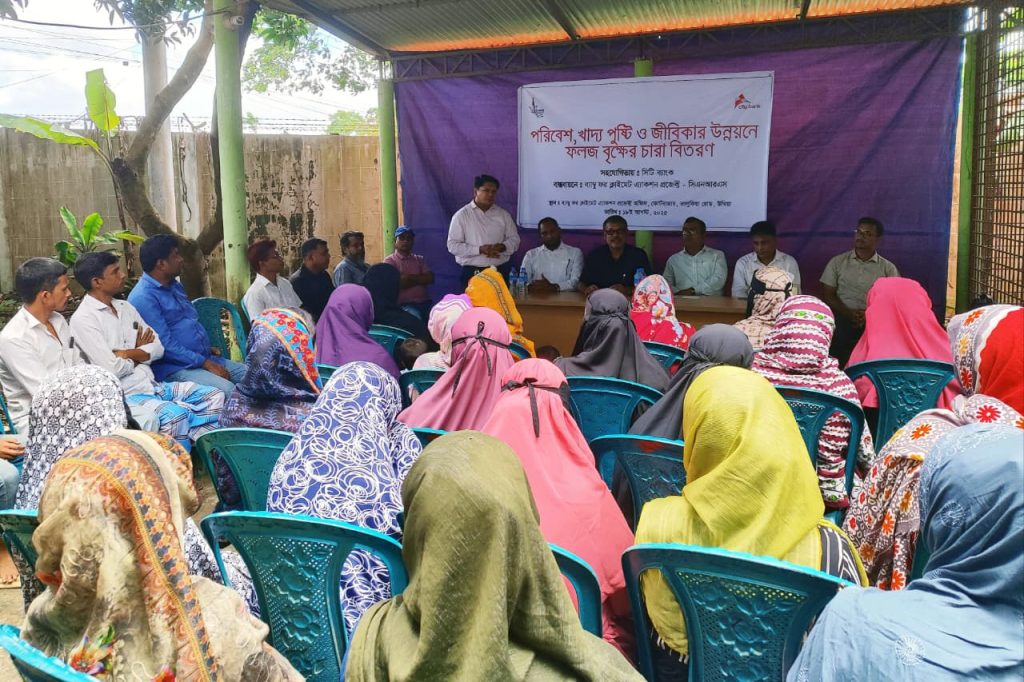
The program was formally launched through an inclusive inauguration that brought together key stakeholders, including representatives from City Bank, the Bangladesh Forest Department, local government institutions, and media. This early multi-stakeholder engagement established strong coordination mechanisms that were sustained throughout plantation, monitoring, and maintenance phases, ensuring both accountability and local ownership.
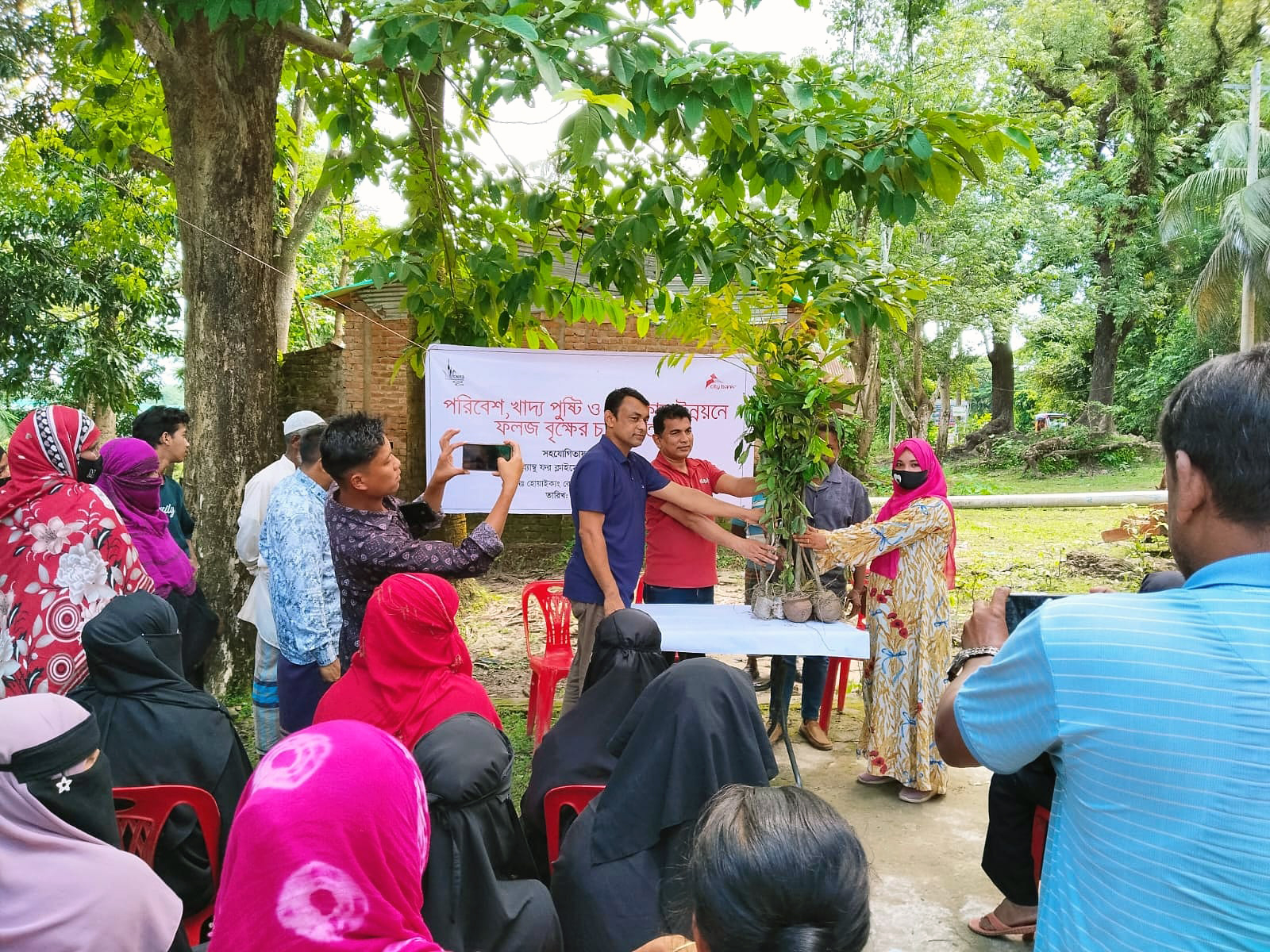
Between August and September 2025, a total of 5,000 fruiting saplings were distributed, with each household receiving 10 saplings of locally suitable species such as Mango, Guava, Jackfruit, Litchi, Coconut, Olive, Hog plum, and Blackberry. Recognizing that distribution alone does not ensure success, the program integrated a practical support mechanism: each family received BDT 650 in conditional assistance to cover fencing and transportation costs. This small but strategic investment significantly improved sapling protection and early-stage survival.
The results were both rapid and remarkable. Within just one month, survival rates reached an outstanding 95%, well above conventional plantation benchmarks. Robust growth among key species like mango, guava, and coconut highlights not only ecological suitability but also the effectiveness of community engagement strategies. Beneficiaries actively maintained watering schedules and protective fencing, supported by local volunteers and field teams, demonstrating a strong sense of ownership and accountability.
Beyond quantitative success, the qualitative transformation is equally compelling. Homesteads are visibly greener, households are investing in assets that will generate food and economic value over time, and communities are increasingly engaged in environmental stewardship. The initiative is also contributing to biodiversity restoration and strengthening climate resilience in one of Bangladesh’s most disaster-prone regions.
For future CSR investments, this initiative offers a clear, scalable model. It demonstrates that relatively modest funding, when strategically designed and community-driven, can deliver high survival rates, strong participation, and multi-dimensional impact within a short timeframe. The integration of financial incentives, local coordination, and continuous monitoring ensures both immediate results and long-term sustainability.
As these trees mature, they will provide sustained nutrition, diversify income sources, and enhance ecosystem stability. More importantly, they represent a shift from short-term aid to long-term resilience building, turning CSR contributions into enduring environmental and socio-economic value.
This is not just a plantation initiative. It is a replicable blueprint for how corporate partnerships can drive climate action, strengthen vulnerable communities, and create lasting impact at scale.